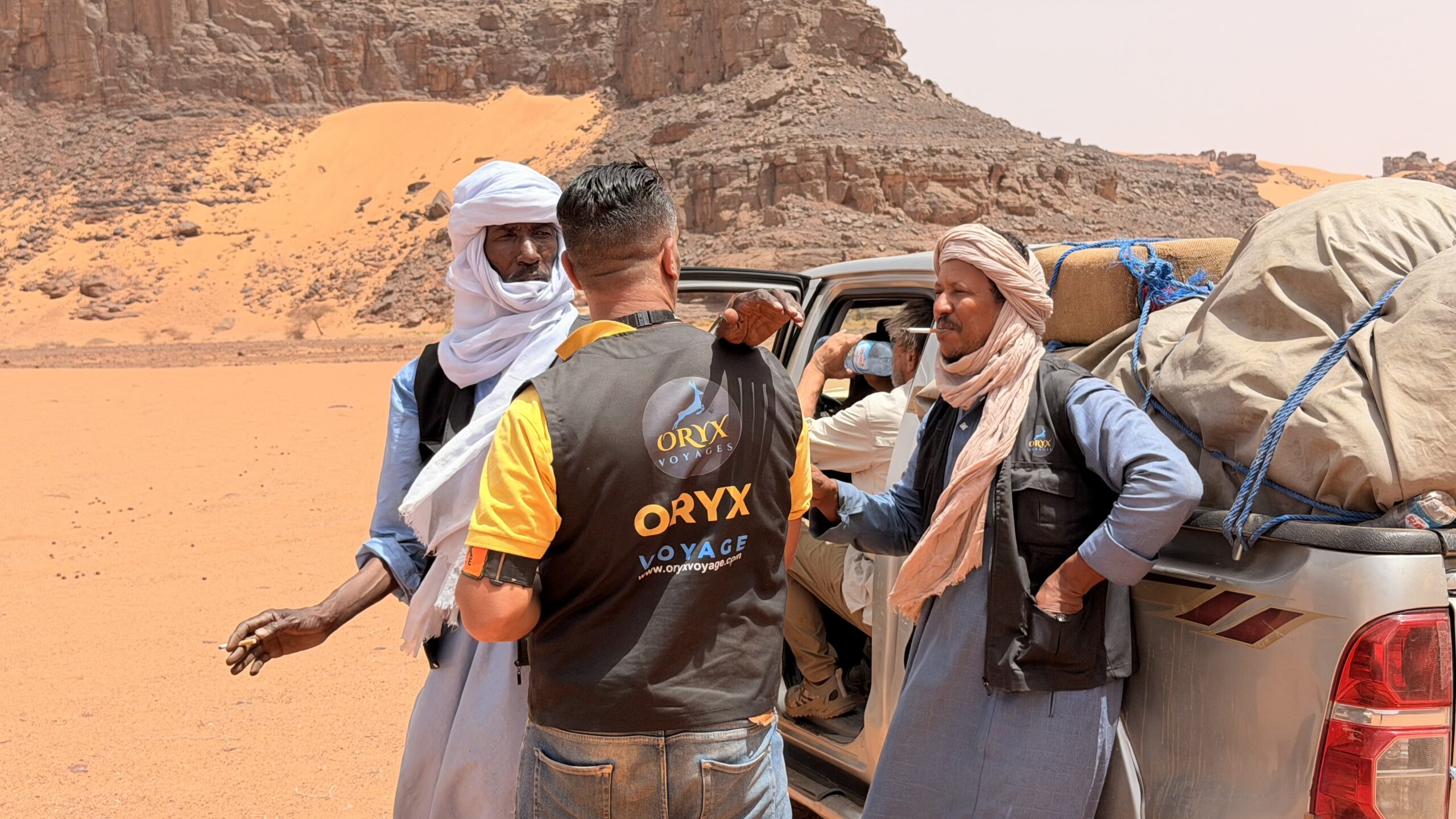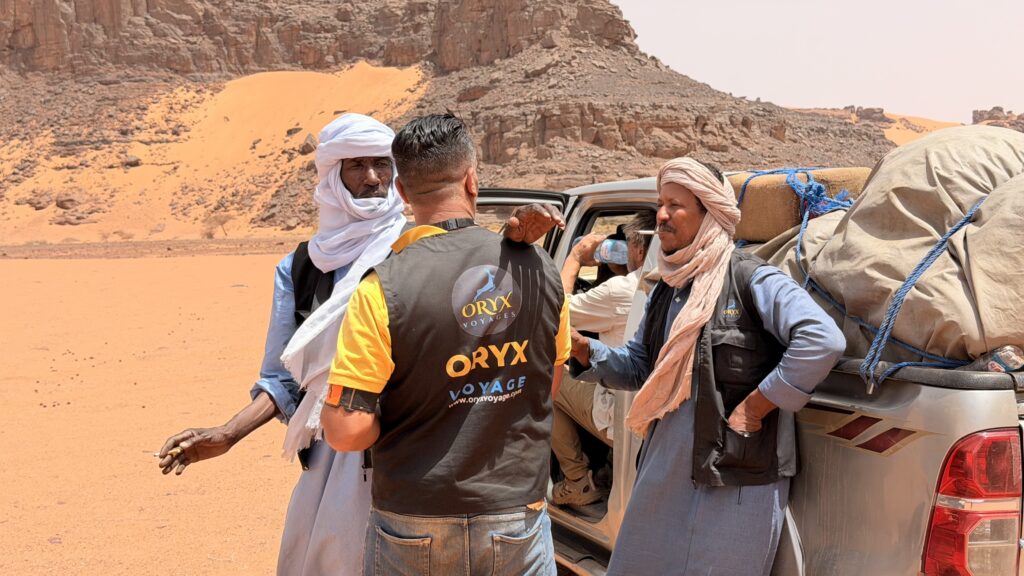
Discover the breathtaking landscapes of Tassili n’Ajjer, ancient rock art, Touareg culture, spectacular desert adventures, practical travel tips, and everything you need to plan the perfect trip to Djanet, Algeria.
If you’re looking for the ultimate Djanet Travel Guide, you’ve come to the right place. Nestled in the far southeast of Algeria, Djanet is the gateway to the spectacular Tassili n’Ajjer National Park, a UNESCO World Heritage Site famous for its prehistoric rock art, towering sandstone formations, endless golden dunes, hidden oases, and rich Touareg culture. Despite being one of the world’s most extraordinary desert destinations, Djanet remains largely untouched by mass tourism, offering adventurous travellers an authentic Sahara experience unlike anywhere else on Earth.
Whether you’re planning your first visit, searching for the best time to travel, wondering how to obtain an Algerian visa, or looking for the perfect desert adventure, this Travel Guide to Djanet Algeria covers everything you need to know. From practical travel advice and cultural insights to the region’s most spectacular attractions, this comprehensive guide will help you plan an unforgettable journey into the heart of the Algerian Sahara.
In this guide, you’ll discover why Djanet has become one of Africa’s most rewarding adventure destinations, explore the incredible landscapes of Tassili n’Ajjer and Tadrart Rouge, learn about ancient civilizations through some of the world’s finest prehistoric rock art, meet the legendary Touareg people, and find expert tips to make the most of your visit. Whether you’re travelling independently or joining a Private Djanet Algeria Tour, this guide will help you experience the very best that southern Algeria has to offer.
What You’ll Find in This Guide
To help you plan your journey, this guide covers:
- Where Djanet is located and how to get there
- Why Djanet is one of the world’s most extraordinary desert destinations
- The UNESCO-listed Tassili n’Ajjer National Park
- Tadrart Rouge, Tin Merzouga, Tikoubaouine, Issendilène, Erg Admer, and other must-visit sites
- Prehistoric rock art and archaeological treasures
- Touareg culture, traditions, and hospitality
- The best time to visit Djanet
- Visa requirements and how to travel to Algeria
- What to pack for a Sahara adventure
- Safety tips and practical travel advice
- Recommended itineraries for different trip lengths
- Frequently asked questions about visiting Djanet
By the end of this guide, you’ll have everything you need to confidently plan an unforgettable journey to one of the last truly untouched corners of the Sahara.
Where Is Djanet?
Located in the far southeast of Algeria, Djanet is a small oasis town in Illizi Province, close to the borders with Libya and Niger. Surrounded by some of the most spectacular landscapes in the Sahara Desert, Djanet is widely regarded as the gateway to Tassili n’Ajjer National Park, one of Algeria’s most treasured natural and cultural landmarks.
Despite its remote location, Djanet is surprisingly accessible thanks to regular domestic flights from Algiers. This isolation has helped preserve the region’s authentic character, making it one of the few places in the Sahara where travellers can still experience untouched desert landscapes, traditional Touareg culture, and ancient archaeological sites far from mass tourism.
At an elevation of approximately 1,050 metres (3,445 feet) above sea level, Djanet enjoys a unique desert environment where dramatic sandstone mountains, vast golden sand dunes, hidden canyons, lush oases, and prehistoric rock art coexist within a remarkably diverse landscape. It is the perfect starting point for exploring both Tassili n’Ajjer National Park and the spectacular Tadrart Rouge, two of the most iconic destinations in the Algerian Sahara.
Today, Djanet has become Algeria’s leading destination for adventure tourism, attracting travellers from around the world who come to discover its extraordinary geology, UNESCO World Heritage landscapes, ancient rock art, hiking trails, photography opportunities, and the warm hospitality of the Touareg people.
Quick Facts About Djanet
- Country: Algeria
- Province: Illizi
- Region: Southeastern Algeria
- Elevation: Approximately 1,050 m (3,445 ft)
- Nearest International Airport: Algiers Houari Boumediene Airport
- Domestic Airport: Djanet – Moufdi Zakaria Airport
- Famous For: Tassili n’Ajjer National Park, Tadrart Rouge, prehistoric rock art, Touareg culture, spectacular Sahara landscapes, and desert expeditions.
Why Visit Djanet?
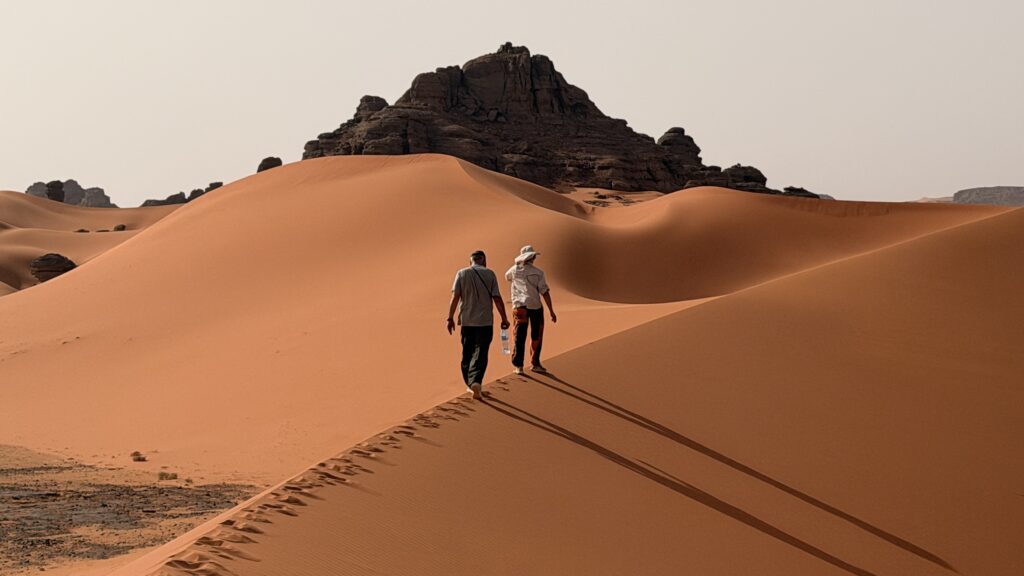
Few places on Earth offer the same combination of natural beauty, history, culture, and adventure as Djanet. Hidden deep within the Algerian Sahara, this extraordinary oasis town is the gateway to some of Africa’s most breathtaking landscapes, including the UNESCO-listed Tassili n’Ajjer National Park and the spectacular Tadrart Rouge.
Unlike many popular desert destinations, Djanet remains remarkably untouched by mass tourism. Here, you’ll discover vast sand dunes without crowds, ancient rock art preserved for thousands of years, dramatic sandstone mountains sculpted by nature, hidden oases, and a way of life that has changed little over the centuries.
Whether you’re an adventurer, photographer, history enthusiast, or nature lover, Djanet offers unforgettable experiences that are difficult to find anywhere else in the world.
Discover One of the World’s Greatest Open-Air Museums
The landscapes surrounding Djanet contain more than 15,000 prehistoric rock paintings and engravings, making Tassili n’Ajjer National Park one of the world’s most important archaeological sites. These remarkable works of art tell the story of a Sahara that was once green, inhabited by elephants, giraffes, cattle, and early human communities thousands of years ago.
Explore Extraordinary Desert Landscapes
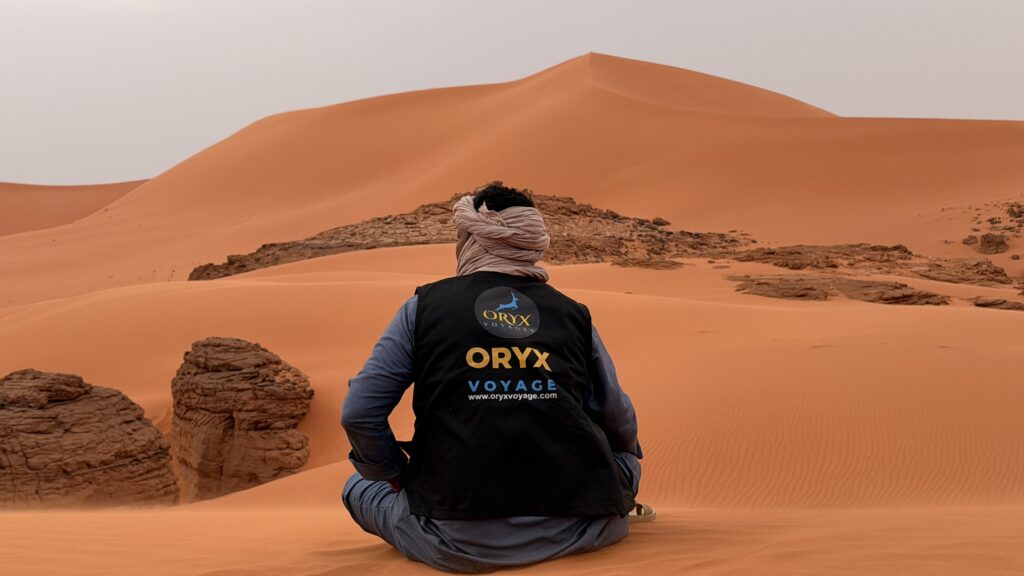
From the towering red dunes of Tin Merzouga and Tadrart Rouge to the spectacular sandstone forests of Tikoubaouine, the peaceful Issendilène Oasis, and the endless golden dunes of Erg Admer, every day reveals landscapes unlike anywhere else on Earth. The incredible diversity of scenery is one of the reasons Djanet is considered one of the finest desert destinations in the world.
Experience Authentic Touareg Culture
The Touareg people have called this region home for centuries. Their knowledge of the desert, warm hospitality, traditional music, distinctive blue clothing, and rich cultural heritage add a unique human dimension to every visit. Travelling with local Touareg guides offers an authentic insight into life in the Sahara that simply cannot be experienced elsewhere.
A Paradise for Photography
Djanet is a dream destination for photographers. The constantly changing colours of the dunes, dramatic sandstone formations, ancient rock art, crystal-clear night skies, and spectacular sunrises and sunsets provide endless opportunities to capture extraordinary images throughout the year.
Adventure Without the Crowds
Unlike many famous desert destinations, Djanet remains peaceful and unspoiled. Visitors can spend hours exploring canyons, dunes, and archaeological sites without encountering large groups of tourists, creating a far more authentic and immersive travel experience.
A UNESCO World Heritage Treasure
Recognized by UNESCO for both its exceptional natural beauty and outstanding prehistoric heritage, Tassili n’Ajjer National Park is one of Algeria’s greatest national treasures. Visiting Djanet means discovering a destination of global significance while experiencing one of the last truly untouched regions of the Sahara.
Tassili n’Ajjer National Park
At the heart of every visit to Djanet lies the extraordinary Tassili n’Ajjer National Park, one of the world’s most remarkable natural and cultural treasures. Covering more than 72,000 square kilometres (27,800 square miles) in southeastern Algeria, this immense sandstone plateau is renowned for its spectacular landscapes, prehistoric rock art, and rich Touareg heritage.
Recognized as a UNESCO World Heritage Site in 1982, Tassili n’Ajjer is considered one of Africa’s most important protected areas. It is home to more than 15,000 prehistoric rock paintings and engravings, breathtaking geological formations, hidden oases, dramatic canyons, and some of the Sahara’s most iconic landscapes.
Whether you’re passionate about nature, history, photography, hiking, or archaeology, Tassili n’Ajjer offers an unforgettable journey into one of the last truly untouched regions of the Sahara.
A UNESCO World Heritage Site
Tassili n’Ajjer was inscribed on the UNESCO World Heritage List because of its exceptional combination of natural beauty and archaeological importance. The park preserves thousands of years of human history while protecting one of the Sahara’s most spectacular desert ecosystems.
Its prehistoric rock art documents the dramatic transformation of the Sahara from a fertile landscape filled with rivers, lakes, forests, and wildlife into the vast desert we see today.
Extraordinary Geology
Over millions of years, wind and water have sculpted Tassili n’Ajjer into an extraordinary natural masterpiece. Towering sandstone cliffs, narrow canyons, natural arches, rock forests, deep gorges, and endless sand dunes create an ever-changing landscape unlike anywhere else on Earth.
Many of the rock formations resemble castles, cathedrals, giant mushrooms, or sculptures, making the park one of the world’s finest destinations for hiking, photography, and geological exploration.
A Journey Through Prehistoric History
One of Tassili n’Ajjer’s greatest treasures is its exceptional collection of prehistoric rock art. More than 15,000 paintings and engravings depict scenes of everyday life dating back thousands of years, providing an extraordinary record of early human civilization.
Visitors can discover ancient images of elephants, giraffes, cattle, rhinoceroses, crocodiles, hunters, ceremonies, and daily life, revealing a time when the Sahara was a fertile and thriving landscape.
Incredible Biodiversity
Although best known for its desert scenery, Tassili n’Ajjer also supports a surprising variety of plant and animal life. Hidden oases, seasonal water sources, and isolated mountain habitats provide refuge for numerous desert species uniquely adapted to this harsh environment.
These fragile ecosystems contribute to the park’s outstanding ecological importance and further justify its UNESCO recognition.
The Heart of Touareg Culture
For centuries, Tassili n’Ajjer has been the homeland of the Touareg people. Their intimate knowledge of the desert, traditional nomadic lifestyle, hospitality, music, and customs remain an essential part of every journey through the region.
Travelling with local Touareg guides allows visitors to experience the Sahara through the eyes of those who have called it home for generations.
Must-Visit Places in Tassili n’Ajjer
Tassili n’Ajjer National Park is home to some of Algeria’s most spectacular natural and archaeological sites, including:
- Tadrart Rouge, famous for its towering red dunes and dramatic sandstone formations.
- Tin Merzouga, often described as one of the most beautiful desert landscapes on Earth.
- Tikoubaouine, renowned for its extraordinary sandstone pillars and panoramic viewpoints.
- Issendilène Oasis, a hidden canyon oasis surrounded by towering cliffs.
- Erg Admer, an immense sea of golden sand dunes.
- Ancient rock art sites featuring the famous Crying Cow, Big Giraffes, and Elephant Petroglyph.
Together, these extraordinary landscapes make Tassili n’Ajjer National Park one of the greatest natural and cultural destinations in Africa and the highlight of any journey to Djanet.
Tadrart Rouge: The Red Desert of Algeria
Among all the extraordinary landscapes of the Algerian Sahara, Tadrart Rouge is undoubtedly one of the most breathtaking. Located within the southeastern region of Tassili n’Ajjer National Park, this remote desert is famous for its towering red sand dunes, dramatic sandstone mountains, prehistoric rock art, and surreal scenery that seems almost untouched by time.
The name “Tadrart Rouge”, meaning “Red Mountains”, perfectly describes this spectacular landscape. Here, vibrant orange and deep red dunes flow between ancient sandstone cliffs sculpted by millions of years of wind and erosion, creating one of the most photogenic desert environments in the world.
A Landscape Unlike Anywhere Else
Unlike the endless flat deserts often imagined when thinking of the Sahara, Tadrart Rouge offers an incredible diversity of scenery. Every turn reveals towering dunes, narrow valleys, rock arches, sculpted cliffs, natural towers, and vast open plains that constantly change colour with the movement of the sun.
The combination of red sand, black volcanic rocks, golden dunes, and striking sandstone formations creates landscapes that many travellers describe as otherworldly.
A Paradise for Adventure
Exploring Tadrart Rouge is an adventure in itself. Most journeys are made by specially equipped 4×4 vehicles, allowing visitors to reach remote areas inaccessible by ordinary roads. Along the way, there are countless opportunities for hiking, photography, short walks through the dunes, and discovering hidden corners of the Sahara that few people ever experience.
Whether climbing the towering dunes for panoramic views or walking among ancient rock formations, every day brings new discoveries and unforgettable scenery.
Home to Ancient Rock Art
Tadrart Rouge is also an important archaeological treasure. Hidden among its cliffs and sandstone shelters are numerous prehistoric rock paintings and engravings that reveal the lives of people who inhabited the Sahara thousands of years ago.
These remarkable artworks depict animals, hunters, pastoral communities, and daily life during a period when the Sahara was covered with grasslands, rivers, and abundant wildlife.
Must-See Places in Tadrart Rouge
Some of the most spectacular locations within Tadrart Rouge include:
- Tin Merzouga, famous for its immense red dunes and black volcanic mountains.
- Oued Adjelati, where golden dunes are beautifully dusted with fine black sand.
- The Cathedral, a magnificent sandstone formation carved by millions of years of erosion.
- In Tihak, home to remarkable prehistoric rock art, including the famous Elephant Petroglyph and the Big Giraffes.
- Tieska, renowned for its dramatic dunes, impressive mountains, and ancient archaeological sites.
- Moul Naga, one of the region’s most peaceful and scenic desert camps.
Together, these extraordinary sites make Tadrart Rouge one of the greatest highlights of any journey through the Algerian Sahara.
Why Visit Tadrart Rouge?
For many travellers, Tadrart Rouge represents the Sahara at its most spectacular. It combines breathtaking landscapes, prehistoric history, authentic Touareg culture, unforgettable desert camping, and complete tranquillity in a destination that remains remarkably untouched by mass tourism.
Whether you’re passionate about photography, hiking, geology, archaeology, or simply experiencing one of the world’s last great wildernesses, Tadrart Rouge offers an adventure unlike anywhere else on Earth.
💡 Oryx Voyage Tip: Tadrart Rouge is best explored over several days. Spending multiple nights in the desert allows you to experience its ever-changing landscapes, spectacular sunrises and sunsets, and unforgettable nights beneath some of the clearest star-filled skies in the world. Our 9-Day Private Djanet Algeria Tour includes several days exploring Tadrart Rouge, giving you the opportunity to discover its most iconic landscapes at a relaxed pace.
Tin Merzouga: Algeria’s Mars-Like Landscape
Among the countless natural wonders of Tassili n’Ajjer National Park, Tin Merzouga stands out as one of the most spectacular and unforgettable. Famous for its towering red sand dunes, dramatic black volcanic mountains, and breathtaking desert scenery, Tin Merzouga is often described as one of the most beautiful places in the Algerian Sahara.
Many travellers compare its extraordinary landscapes to the surface of Mars. The striking contrast between the deep red dunes, dark rocky mountains, and endless desert horizons creates an almost surreal environment that feels unlike anywhere else on Earth.
A Masterpiece Created by Nature
Over thousands of years, wind has shaped the dunes of Tin Merzouga into magnificent natural sculptures. Some rise more than one hundred metres above the surrounding desert, constantly changing their shape as the wind moves the fine Saharan sand.
Surrounding the dunes, dark volcanic mountains create an extraordinary contrast that makes Tin Merzouga one of the most photogenic destinations in Algeria.
One of the Sahara’s Greatest Photography Locations
Whether you are a professional photographer or simply enjoy capturing beautiful landscapes, Tin Merzouga offers endless opportunities for unforgettable images.
The warm light of sunrise and sunset transforms the dunes into brilliant shades of gold, orange, and deep red, while the black mountains provide a dramatic backdrop unlike anywhere else in the Sahara.
Nightfall brings another spectacular experience, as the absence of light pollution reveals one of the clearest star-filled skies in the world.
More Than Just Sand Dunes
Although famous for its impressive dunes, Tin Merzouga is also a place of remarkable geological diversity. Visitors can explore sandstone formations, ancient desert valleys, rocky plateaus, and hidden corners that reveal the incredible forces that have shaped the Sahara over millions of years.
The peaceful silence, vast open spaces, and untouched beauty make every visit a memorable experience.
A Highlight of Every Djanet Adventure
No journey through southern Algeria would be complete without experiencing Tin Merzouga. Whether you’re climbing the towering dunes, watching the changing colours of the desert, or simply enjoying the tranquillity of this remarkable landscape, it’s easy to understand why so many travellers consider Tin Merzouga the highlight of their visit to Djanet.
💡 Oryx Voyage Tip: We recommend visiting Tin Merzouga in the late afternoon, when the low sunlight brings out the rich colours of the dunes and mountains. Staying overnight nearby also gives you the opportunity to enjoy an unforgettable Sahara sunset, a spectacular sunrise, and one of the clearest night skies on Earth.
Tikoubaouine: The Sandstone Masterpiece of Tassili n’Ajjer
Among the many wonders of Tassili n’Ajjer National Park, Tikoubaouine is one of the most impressive geological landscapes in the Algerian Sahara. Renowned for its towering sandstone pillars, sculpted rock formations, and breathtaking panoramic views, it is a destination that fascinates hikers, photographers, geologists, and nature lovers alike.
Shaped by millions of years of wind and erosion, Tikoubaouine is a natural masterpiece where towering rock spires rise dramatically above golden dunes and desert plains. Every formation has been carved into unique shapes, creating an open-air gallery of natural sculptures that continues to evolve with time.
An Extraordinary Geological Wonderland
The landscape of Tikoubaouine is unlike any other in the Sahara. Massive sandstone towers, narrow passages, rocky plateaus, and hidden valleys create an incredible variety of scenery within a relatively small area.
As you walk through these remarkable formations, you’ll discover new perspectives at every turn, making Tikoubaouine one of the most rewarding places to explore on foot in the entire Tassili region.
A Paradise for Hikers
Tikoubaouine offers some of the most enjoyable walking opportunities in Tassili n’Ajjer National Park. Gentle trails wind between towering rock formations, across soft sand, and through peaceful desert landscapes, allowing visitors to fully appreciate the scale and beauty of this extraordinary environment.
Whether you’re looking for a short scenic walk or a longer exploration with your Touareg guide, Tikoubaouine provides an unforgettable hiking experience suitable for most travellers.
One of Algeria’s Finest Photography Locations
The constantly changing light transforms Tikoubaouine throughout the day. At sunrise and sunset, the sandstone formations glow in shades of gold, orange, and red, while the surrounding dunes create striking contrasts that make every viewpoint worthy of a photograph.
Its dramatic scenery has made Tikoubaouine one of the most photographed locations in southern Algeria.
A Landscape of Silence and Serenity
Beyond its spectacular scenery, Tikoubaouine offers something increasingly rare in today’s world—complete tranquillity. Far from busy tourist destinations, visitors can spend hours exploring these magnificent rock formations surrounded only by the silence of the Sahara and the gentle sound of the desert wind.
This peaceful atmosphere makes Tikoubaouine one of the most memorable places to experience the true spirit of the Algerian Sahara.
💡 Oryx Voyage Tip: We recommend spending several hours exploring Tikoubaouine on foot with an experienced Touareg guide. The most beautiful viewpoints and hidden rock formations are often found away from the vehicle tracks, rewarding visitors with breathtaking panoramas and unique photographic opportunities.
Issendilène Oasis: The Green Heart of Tassili n’Ajjer
Hidden among the towering sandstone cliffs of Tassili n’Ajjer National Park, Issendilène Oasis is one of the most beautiful and unexpected landscapes in the Algerian Sahara. Surrounded by dramatic canyon walls, this peaceful oasis offers a refreshing contrast to the endless dunes and rocky plateaus that characterize the surrounding desert.
Thanks to its permanent spring, Issendilène has become a haven for wildlife, lush vegetation, and palm trees, creating a small paradise in the heart of one of the world’s driest regions.
A Hidden Canyon Oasis
Reaching Issendilène is an adventure in itself. A pleasant walk through a narrow sandstone canyon gradually reveals towering cliffs, fascinating rock formations, and pockets of greenery before opening onto the oasis.
The journey is just as rewarding as the destination, with every turn revealing another spectacular view of the surrounding landscape.
A Refreshing Natural Spring
The crystal-clear spring that flows through Issendilène has sustained life here for centuries. Flowing gently between rocks and palm trees, it creates a peaceful environment where visitors can relax, enjoy the cool shade, and appreciate the remarkable contrast between water and desert.
The presence of flowing water in the middle of the Sahara makes Issendilène one of the most remarkable natural attractions near Djanet.
Rich Desert Vegetation
Unlike the surrounding desert, Issendilène supports a surprising variety of plant life. Palm trees, reeds, shrubs, and seasonal vegetation thrive around the spring, creating an ecosystem that attracts birds and other desert wildlife.
This unique environment demonstrates the incredible resilience of life in the Sahara and highlights the importance of oases throughout the region’s history.
One of the Most Peaceful Places in Djanet
Issendilène is more than just a beautiful oasis—it’s a place to slow down and appreciate the tranquillity of the Sahara. The sound of flowing water, the shade of the palm trees, and the towering sandstone cliffs create an atmosphere of calm that leaves a lasting impression on every visitor.
For many travellers, this quiet oasis becomes one of the most memorable moments of their journey through Tassili n’Ajjer.
💡 Oryx Voyage Tip: Wear comfortable walking shoes when visiting Issendilène Oasis. The short walk through the canyon is suitable for most travellers and rewards you with one of the most beautiful natural settings in the Algerian Sahara. Early morning and late afternoon offer the most pleasant temperatures and the best light for photography.
Prehistoric Rock Art in Tassili n’Ajjer
One of the greatest treasures of Tassili n’Ajjer National Park is its extraordinary collection of prehistoric rock art. Scattered across sandstone cliffs, caves, and natural rock shelters, more than 15,000 paintings and engravings have been discovered throughout the region, making Tassili n’Ajjer one of the world’s most important open-air museums.
Created over thousands of years, these remarkable artworks preserve the story of a Sahara that looked completely different from the desert we know today. Long before the sand dunes expanded across North Africa, this region was covered by rivers, lakes, grasslands, and forests that supported a rich variety of wildlife and thriving human communities.
Today, these ancient masterpieces provide an extraordinary window into prehistoric life and are one of the main reasons Tassili n’Ajjer National Park was recognized as a UNESCO World Heritage Site.
A Journey Through the Green Sahara
The oldest rock art found in Tassili n’Ajjer dates back thousands of years and records one of the greatest environmental transformations in Earth’s history.
The paintings show elephants, giraffes, rhinoceroses, hippopotamuses, crocodiles, antelopes, cattle, and human communities living in a fertile landscape that bore little resemblance to today’s Sahara Desert.
As the climate gradually became drier, the artwork also changed, documenting the arrival of pastoral societies, domesticated animals, and eventually camels, illustrating the remarkable evolution of life in the region over millennia.
The Famous Crying Cow
Among the most celebrated prehistoric paintings in Tassili n’Ajjer is the Crying Cow, located near Timras. This remarkable artwork depicts a cow with what appears to be tears flowing from its eye, making it one of the Sahara’s most iconic and emotionally powerful images.
Although archaeologists continue to debate its exact meaning, the painting has become a symbol of the dramatic environmental changes that transformed the once-fertile Sahara into the vast desert we see today.
The Big Giraffes
The Big Giraffes are among the largest and most impressive prehistoric paintings in Tassili n’Ajjer. Their elegant proportions, remarkable preservation, and artistic quality demonstrate the extraordinary skill of the ancient artists who created them thousands of years ago.
These magnificent paintings also remind visitors that giraffes once roamed freely across what is now one of the driest regions on Earth.
The Elephant Petroglyph
Another outstanding archaeological treasure is the famous Elephant Petroglyph near In Tihak. Carefully carved into the sandstone, this impressive engraving is a powerful reminder that elephants once inhabited the Green Sahara before climatic changes transformed the landscape.
It is considered one of the finest examples of prehistoric rock engraving in the Algerian Sahara.
A UNESCO Treasure of Global Importance
The prehistoric rock art of Tassili n’Ajjer is far more than a collection of ancient drawings. Together, these paintings and engravings represent one of humanity’s most valuable archaeological archives, helping researchers understand prehistoric cultures, climate change, migration, and the development of early societies in North Africa.
Every visit to these remarkable sites offers a rare opportunity to stand before works of art that have survived for thousands of years, preserved by the dry desert climate and protected within one of the world’s most extraordinary cultural landscapes.
✦ Oryx Voyage Expert Tip: Many of Tassili n’Ajjer’s most remarkable rock art sites can only be reached with experienced local guides. Our Touareg guides not only lead you safely through the desert but also share the stories, history, and cultural significance behind these extraordinary masterpieces, bringing the ancient Sahara to life.
Touareg Culture: The Guardians of the Sahara
No visit to Djanet is complete without experiencing the rich culture and legendary hospitality of the Touareg people. Often referred to as the “Blue People of the Sahara” because of their distinctive indigo clothing, the Touareg have lived and travelled across the Sahara Desert for centuries, developing an extraordinary knowledge of one of the world’s most challenging environments.
Today, the Touareg remain the cultural heart of southern Algeria. Their traditions, music, craftsmanship, cuisine, and deep connection with the desert continue to shape daily life in Djanet and throughout Tassili n’Ajjer National Park.
Masters of the Sahara
For generations, the Touareg have navigated the vast Sahara using the stars, mountains, and natural landmarks long before the arrival of modern technology. Their remarkable understanding of the desert has enabled them to travel safely across immense distances while adapting to one of the harshest climates on Earth.
Today, this knowledge makes Touareg guides the ideal companions for exploring the hidden valleys, rock art sites, remote dunes, and spectacular landscapes of Tassili n’Ajjer.
Hospitality as a Way of Life
Hospitality is one of the most cherished values in Touareg culture. Visitors are welcomed with genuine warmth and respect, often beginning with the traditional tea ceremony, a timeless ritual that symbolizes friendship, patience, and generosity.
Sharing tea around the campfire while listening to stories of the Sahara is one of the most memorable experiences of any journey through Djanet.
Traditional Music and Storytelling
Music has always played an important role in Touareg culture. Traditional songs, rhythmic hand drums, and the distinctive sounds of Saharan instruments accompany celebrations, family gatherings, and evenings beneath the stars.
Storytelling is equally important, with legends, poetry, and oral history passed from one generation to the next, preserving the memories and traditions of the Sahara.
Touareg Crafts and Jewellery
The Touareg are renowned for their exceptional craftsmanship. Silver jewellery, leather goods, swords, handwoven textiles, and decorative objects are created using techniques passed down through generations.
Visitors exploring the markets of Djanet will find beautiful handcrafted souvenirs that reflect the artistic heritage of the Sahara while supporting local artisans.
A Living Culture
Although modern life has brought many changes, the Touareg continue to preserve their identity, language, customs, and close relationship with the desert. Rather than being part of a museum or the distant past, Touareg culture remains vibrant and alive, offering visitors an authentic insight into one of the world’s most fascinating nomadic traditions.
Meeting the Touareg is often one of the most rewarding parts of a journey through Djanet. Their knowledge, kindness, and deep respect for nature add a human dimension to the breathtaking landscapes of the Algerian Sahara.
✦ Oryx Voyage Expert Tip: The best way to discover authentic Touareg culture is by travelling with local Touareg guides. Throughout our Sahara expeditions, you’ll share traditional meals, enjoy tea ceremonies, learn about life in the desert, and experience genuine hospitality that cannot be found in conventional tourist destinations.
Desert Camping: An Unforgettable Night Beneath the Sahara Stars
For many travellers, spending a night in the Sahara is the highlight of a visit to Djanet. Far from cities and artificial lights, desert camping offers a unique opportunity to experience the silence, beauty, and vastness of one of the world’s most extraordinary landscapes.
Whether you’re camping among the towering red dunes of Tadrart Rouge or beneath the spectacular sandstone formations of Tassili n’Ajjer National Park, every evening brings a different setting and an unforgettable connection with nature.
Comfortable Desert Camps
Camping in the Algerian Sahara combines adventure with comfort. Your Touareg team carefully selects scenic campsites and sets up comfortable tents before your arrival. Mattresses, blankets, tables, chairs, and a welcoming campfire create a relaxing atmosphere where you can unwind after a day of exploration.
Each campsite is chosen for its beauty, tranquillity, and proximity to the next day’s adventure, allowing you to experience different landscapes throughout your journey.
Traditional Campfire Evenings
As the sun disappears behind the dunes, the camp comes to life. The aroma of freshly prepared dinner fills the air while travellers gather around the campfire to enjoy traditional Touareg hospitality.
Evenings often begin with a traditional tea ceremony, followed by delicious local cuisine, conversations with your guides, and stories about the Sahara, its history, and its people. These shared moments create lasting memories and are often among the most treasured experiences of the journey.
Sleeping Under One of the World’s Clearest Night Skies
With almost no light pollution, the skies above Djanet offer exceptional conditions for stargazing. Thousands of stars, the Milky Way, and countless constellations become clearly visible, creating an unforgettable spectacle that few places on Earth can match.
Many travellers say that simply looking up at the night sky becomes one of the defining moments of their Sahara adventure.
Wake Up to Spectacular Desert Sunrises
Every morning begins with a new masterpiece of nature. As the first rays of sunlight illuminate the dunes and sandstone formations, the desert is transformed into brilliant shades of gold, orange, and crimson.
Enjoy breakfast surrounded by peaceful desert scenery before continuing your exploration of the remarkable landscapes of Tassili n’Ajjer National Park.
A Truly Authentic Sahara Experience
Desert camping is much more than simply spending the night outdoors. It is an opportunity to disconnect from everyday life, embrace the rhythm of the Sahara, and experience the timeless traditions of the Touareg people.
For many visitors, these peaceful nights beneath the stars become the most unforgettable memories of their journey through southern Algeria.
✦ Oryx Voyage Expert Tip: Even during the warmer months, desert nights can become surprisingly cool. We recommend bringing a light fleece or jacket so you can comfortably enjoy the campfire, the tea ceremony, and the spectacular star-filled sky long into the evening.
Traditional Touareg Food & Sahara Cuisine
A journey through Djanet is not only an adventure for the eyes but also a discovery of the authentic flavours of the Algerian Sahara. Prepared with simple, fresh ingredients and generations of culinary tradition, Touareg cuisine reflects the resourcefulness, hospitality, and nomadic heritage of the people who have lived in this remarkable environment for centuries.
Whether enjoying lunch beneath the shade of a sandstone cliff or sharing dinner around a campfire under a sky full of stars, every meal becomes an unforgettable part of the Sahara experience.
Freshly Prepared Meals in the Desert
One of the highlights of travelling through Tassili n’Ajjer National Park is enjoying meals freshly prepared by your Touareg cook. Using portable cooking equipment and carefully selected ingredients, delicious breakfasts, lunches, and dinners are served each day in some of the most spectacular settings imaginable.
Dining in the middle of the Sahara, surrounded by towering dunes and dramatic rock formations, is an experience unlike any restaurant in the world.
Traditional Touareg Specialties
During your journey, you’ll have the opportunity to taste a variety of traditional dishes inspired by Touareg and southern Algerian cuisine. Depending on the season and available ingredients, meals may include freshly baked bread cooked over hot sand or charcoal, slow-cooked meat dishes, couscous, rice, grilled chicken, locally grown vegetables, hearty soups, fresh salads, seasonal fruit, and delicious homemade desserts.
Every meal is prepared with care, combining traditional recipes with the warm hospitality for which the Touareg are renowned.
The Traditional Tea Ceremony
No cultural experience in the Sahara is complete without participating in a traditional Touareg tea ceremony. More than simply serving tea, this cherished ritual represents hospitality, friendship, and respect.
Prepared slowly over glowing coals, the tea is poured several times to create its characteristic foam and enjoyed while sharing stories, conversations, and moments of relaxation around the campfire.
For many travellers, the daily tea ceremony becomes one of the most memorable traditions they experience during their visit to Djanet.
Dining Beneath the Stars
As night falls across the Sahara, dinner takes on a magical atmosphere. Gathering around the campfire, surrounded by complete silence and illuminated by thousands of stars, creates an unforgettable setting that perfectly complements the flavours of traditional Touareg cuisine.
These shared meals often become the moments when lasting friendships are formed and stories of the day’s adventures are exchanged.
Dietary Requirements
Vegetarian, vegan, gluten-free, and other dietary requirements can usually be accommodated with advance notice. When booking your trip, simply inform your tour operator of any allergies, food intolerances, or special dietary preferences so appropriate meals can be prepared throughout your journey.
✦ Oryx Voyage Expert Tip: One of the joys of travelling in the Sahara is experiencing authentic local cuisine in extraordinary locations. Be sure to try traditional Touareg bread, freshly baked in the desert, and don’t miss the daily tea ceremony—it’s one of the most authentic cultural experiences you’ll enjoy during your adventure.
Best Time to Visit Djanet
One of the most common questions travellers ask is, “When is the best time to visit Djanet?” The good news is that Djanet can be visited throughout the year, but the ideal season depends on the type of experience you’re looking for.
Generally, the best time to explore Tassili n’Ajjer National Park and the Algerian Sahara is between October and April, when temperatures are comfortable for hiking, sightseeing, and desert camping.
October to November: Pleasant Weather and Beautiful Light
Autumn marks the beginning of the Sahara travel season. Daytime temperatures are warm without being extreme, making this an excellent time for exploring the dunes, canyons, and prehistoric rock art of Tassili n’Ajjer.
The soft autumn light also creates ideal conditions for landscape photography.
Why visit during this season?
- Comfortable daytime temperatures
- Excellent hiking conditions
- Beautiful sunrise and sunset photography
- Fewer visitors than during peak season
December to February: The Peak Travel Season
Winter is widely considered the best time to visit Djanet. Days are pleasantly mild, making long walks and full-day desert excursions particularly enjoyable. Nights become cooler, creating the perfect atmosphere for campfires, traditional tea ceremonies, and unforgettable stargazing.
This is also the busiest period for Sahara expeditions, so booking well in advance is recommended.
Why visit during this season?
- Ideal temperatures for outdoor activities
- Comfortable conditions for desert camping
- Crystal-clear skies for astrophotography
- The most popular season for exploring Tassili n’Ajjer
March to April: Spring in the Sahara
Spring offers another excellent opportunity to discover Djanet. Temperatures begin to rise, but conditions remain pleasant for exploring the region’s spectacular landscapes.
The longer daylight hours allow visitors to spend more time discovering hidden oases, sandstone formations, and prehistoric archaeological sites.
Why visit during this season?
- Warm but comfortable temperatures
- Longer days for sightseeing
- Excellent conditions for photography
- Ideal for multi-day desert expeditions
May to September: Summer Adventures
Summer brings significantly higher daytime temperatures, particularly during July and August. While travel is still possible, activities are usually adapted to avoid the hottest hours of the day, with early morning departures, shaded lunch breaks, and more relaxed afternoon schedules.
For experienced desert travellers who don’t mind the heat, summer offers a peaceful experience with very few visitors and dramatic desert scenery.
Monthly Climate Overview
| Season | Weather | Recommended |
|---|---|---|
| October – November | Warm days, cool nights | ⭐⭐⭐⭐⭐ Excellent |
| December – February | Mild days, cold nights | ⭐⭐⭐⭐⭐ Best Time |
| March – April | Warm, comfortable | ⭐⭐⭐⭐⭐ Excellent |
| May – September | Hot to very hot | ⭐⭐⭐ Suitable with adapted itineraries |
Our Recommendation
For most travellers, we recommend planning your visit between October and April to enjoy the most comfortable weather and the best conditions for hiking, photography, sightseeing, and camping in the Sahara.
No matter when you visit, Djanet offers extraordinary landscapes, unforgettable cultural experiences, and a chance to discover one of the world’s most remarkable desert destinations.
✦ Oryx Voyage Expert Tip: If your schedule is flexible, consider travelling in November or March. These months combine pleasant temperatures, beautiful natural light, and fewer visitors than the peak winter season, making them ideal for a relaxed and immersive Sahara adventure.
How Many Days Do You Need in Djanet?
The ideal length of your stay in Djanet depends on how much of the Sahara you want to experience. While it’s possible to visit a few attractions on a short trip, the true beauty of Tassili n’Ajjer National Park is best discovered over several days, allowing you to explore its diverse landscapes, archaeological treasures, and rich Touareg culture at a relaxed pace.
Whether you have a long weekend or more than a week, Djanet offers unforgettable experiences for every type of traveller.
3 Days: A Short Introduction
A three-day visit provides a brief introduction to Djanet and its surroundings. You’ll have time to explore nearby attractions, discover the spectacular dunes of Erg Admer, visit local markets, and experience a taste of Touareg hospitality.
While rewarding, a short stay only scratches the surface of what the region has to offer.
Ideal for:
- Travellers with limited time
- First-time visitors to the Sahara
- Short extensions to a wider Algeria itinerary
5 to 6 Days: Discover the Highlights
With five or six days, you’ll have enough time to explore several of the region’s most iconic locations, including spectacular rock formations, prehistoric rock art, hidden oases, and magnificent desert landscapes.
This duration offers a balanced introduction to Tassili n’Ajjer National Park while allowing time to enjoy traditional desert camping and authentic Touareg culture.
Ideal for:
- Adventure travellers
- Photographers
- Nature lovers
- Cultural explorers
8 to 10 Days: The Complete Djanet Experience
If you want to fully appreciate the incredible diversity of the Algerian Sahara, we recommend spending at least eight to ten days in Djanet.
This allows you to combine the spectacular landscapes of Tadrart Rouge with the northern region of Tassili n’Ajjer National Park, visiting iconic destinations such as Tin Merzouga, Tikoubaouine, Issendilène Oasis, Erg Admer, and some of the world’s finest prehistoric rock art sites.
With more time, you’ll also enjoy a slower pace, more opportunities for hiking and photography, and a deeper connection with Touareg culture.
Our Recommendation
For travellers visiting Algeria specifically to experience the Sahara, we recommend a 9-day itinerary, which offers the ideal balance between adventure, comfort, cultural discovery, and exploration.
This duration allows you to experience the very best of Djanet without rushing, combining unforgettable desert camping, spectacular landscapes, UNESCO World Heritage sites, ancient rock art, and authentic Touareg hospitality.
✦ Oryx Voyage Expert Tip: Our 9-Day Private Djanet Algeria Tour has been carefully designed to showcase the very best of Tassili n’Ajjer National Park and Tadrart Rouge. If you’d like a shorter or longer adventure, every itinerary can be 100% customized to match your travel dates, interests, and preferred pace.
How to Get to Djanet
Although Djanet is located deep in the Algerian Sahara, reaching this remarkable destination is easier than many travellers expect. Most international visitors arrive via Algiers, Algeria’s capital, before continuing to Djanet on a domestic flight.
Whether you’re planning an independent journey or booking a guided expedition, understanding the available travel options will help you plan a smooth and enjoyable trip.
By International Flight
The vast majority of international travellers first fly into Houari Boumediene International Airport (ALG) in Algiers. The airport is served by numerous airlines connecting Algeria with Europe, the Middle East, Africa, and other international destinations.
After arriving in Algiers, travellers usually continue to Djanet on a scheduled domestic flight.
Domestic Flights to Djanet
The fastest and most convenient way to reach Djanet is by air. Regular domestic flights connect Algiers with Djanet – Moufdi Zakaria Airport (DJG), allowing travellers to reach the heart of the Sahara in just a few hours.
Flight schedules may vary throughout the year, so it is advisable to plan your itinerary in advance.
Travelling by Road
Djanet can also be reached by road from other parts of Algeria. However, due to the vast distances involved, road travel is generally recommended only for experienced overland travellers or organised expeditions.
Driving across the Sahara requires careful planning, reliable vehicles, and thorough knowledge of desert conditions.
Getting Around Djanet
Most of the region’s famous attractions—including Tadrart Rouge, Tikoubaouine, Issendilène Oasis, and many prehistoric rock art sites—are accessible only by 4×4 vehicles.
For this reason, nearly all visitors explore the region with experienced local Touareg guides who know the terrain, weather conditions, and remote desert routes.
Travel Planning Tips
Before travelling to Djanet, it’s recommended to:
- Book domestic flights well in advance, especially during the peak travel season.
- Confirm your accommodation before arrival.
- Check visa requirements for your nationality.
- Pack appropriate clothing for both warm days and cool desert nights.
- Allow sufficient time to explore beyond Djanet itself, as the region’s greatest attractions are located within Tassili n’Ajjer National Park.
✦ Oryx Voyage Expert Tip: We can arrange every aspect of your journey, including airport assistance, domestic flights, accommodation, visa support, airport transfers, and fully guided Sahara expeditions. This allows you to enjoy your adventure while we take care of all the logistics.
Visa Information
Before travelling to Djanet, most international visitors will need a visa to enter Algeria. Fortunately, the process has become much easier in recent years, especially for travellers visiting the Algerian Sahara through an approved local tour operator.
Understanding your visa options before planning your trip will help ensure a smooth and stress-free travel experience.
Do You Need a Visa?
Most foreign nationals require a visa to visit Algeria. The exact requirements depend on your nationality and the purpose of your visit.
Before booking your trip, we recommend checking the latest visa requirements for your country or contacting us for personalized advice.
Visa on Arrival for the Algerian Sahara
Travellers visiting Djanet and the Algerian Sahara may be eligible for Visa on Arrival (eVisa Authorization) when travelling through an approved local tour operator.
This simplified procedure allows eligible visitors to receive travel authorization before departure and obtain their visa upon arrival in Algeria, making it significantly easier to visit destinations such as Djanet, Tassili n’Ajjer National Park, and Tadrart Rouge.
Standard Tourist Visa
If the Visa on Arrival program is not available for your itinerary or nationality, you can still visit Algeria by applying for a standard tourist visa through the Algerian embassy or consulate in your country.
The application process generally requires supporting travel documents, accommodation details, and an invitation or travel confirmation provided by your tour operator.
Our Recommendation
Visa regulations may change over time and can differ depending on your nationality. Before making travel arrangements, always verify the latest requirements or consult an experienced Algerian travel specialist.
At Oryx Voyage, we assist travellers throughout the visa process by providing the required travel documents, guidance, and support to make visiting Algeria as straightforward as possible.
✦ Oryx Voyage Expert Tip: For detailed information about eligibility, application procedures, required documents, and the differences between the two visa options, read our comprehensive Algerian Visa Guide and Visa on Arrival (eVisa) Guide, or contact our team for personalized assistance before booking your trip.
What to Pack for Djanet
Packing for a trip to Djanet is simpler than many travellers expect. The key is to bring lightweight, practical clothing for warm days, warmer layers for cool desert evenings, and a few essential accessories to protect yourself from the sun and sand.
Whether you’re joining a multi-day expedition through Tassili n’Ajjer National Park or spending time exploring Djanet, packing the right equipment will help you stay comfortable throughout your adventure.
Clothing
Choose lightweight, breathable clothing that provides protection from the sun while keeping you comfortable during the day.
We recommend packing:
- Lightweight long-sleeved shirts
- Comfortable T-shirts
- Lightweight hiking trousers
- Shorts for relaxing at camp
- A warm fleece or light jacket for evenings
- Comfortable sleepwear
- Undergarments and socks
- A light rain jacket (optional during cooler months)
Footwear
Comfortable footwear is essential, especially if you plan to explore canyons, dunes, and archaeological sites.
We recommend bringing:
- Comfortable hiking or trekking shoes
- Lightweight sandals for the campsite
- Flip-flops for hotel stays
Sun Protection
The Sahara enjoys sunshine throughout most of the year, making sun protection essential.
Don’t forget:
- Wide-brimmed hat or cap
- High-SPF sunscreen
- Lip balm with UV protection
- Sunglasses with UV protection
Personal Essentials
A few practical items will make your journey even more comfortable.
Suggested essentials include:
- Reusable water bottle
- Small backpack for day walks
- Headlamp or flashlight
- Power bank
- Camera or smartphone
- Personal medications
- Basic toiletries
- Wet wipes and hand sanitizer
- Personal first-aid supplies
Optional Items
Depending on your interests, you may also wish to bring:
- Binoculars
- Notebook or travel journal
- Portable tripod for photography
- Extra camera batteries and memory cards
- Lightweight scarf or buff for protection from wind and sand
What You Don’t Need to Bring
If you’re travelling with Oryx Voyage, there’s no need to carry bulky camping equipment. Your expedition includes comfortable tents, mattresses, blankets, tables, chairs, cooking equipment, and all camping logistics, allowing you to travel light and enjoy your adventure.
✦ Oryx Voyage Expert Tip: Pack light and choose versatile clothing that can be layered. Soft travel bags or duffel bags are generally more practical than large hard-shell suitcases for Sahara expeditions, especially when travelling by 4×4.
Is Djanet Safe to Visit?
Safety is one of the first questions many travellers ask when planning a trip to Algeria. The good news is that Djanet is widely regarded as one of the country’s safest and most welcoming tourist destinations, especially when visiting with a licensed local tour operator.
Tourism has long been an important part of life in Djanet, and visitors are welcomed with genuine hospitality by the local Touareg community. The region’s peaceful atmosphere, combined with experienced local guides and well-organized logistics, allows travellers to explore the Sahara with confidence.
Safety in the Sahara
Most of the attractions around Djanet are located in remote desert environments within Tassili n’Ajjer National Park. These areas are typically visited as part of organized 4×4 expeditions led by experienced Touareg guides who know the terrain, weather conditions, and routes throughout the park.
Travelling with knowledgeable local guides not only enhances your experience but also ensures that your journey is carefully planned and conducted safely.
Health and Well-Being
The desert climate is generally dry and healthy, but visitors should take simple precautions to stay comfortable during their trip.
We recommend:
- Drinking plenty of water throughout the day.
- Wearing sunscreen, a hat, and sunglasses.
- Dressing in lightweight clothing during the day and warmer layers in the evening.
- Following your guide’s advice during hikes and desert walks.
These simple measures help ensure a safe and enjoyable experience in the Sahara.
Respect Local Customs
Djanet is a welcoming destination where visitors are encouraged to respect local traditions and cultural values. Dressing modestly, asking permission before photographing people, and showing courtesy towards local communities contribute to positive and meaningful cultural exchanges.
The Touareg are known for their warmth and hospitality, and travellers who approach their visit with curiosity and respect are often rewarded with unforgettable experiences.
Travel with Confidence
Like any remote destination, a journey through the Sahara requires proper planning and experienced local support. Choosing a reputable local tour operator ensures that transportation, accommodation, permits, logistics, and local guidance are all professionally managed, allowing you to focus on enjoying the adventure.
With sensible preparation and expert guidance, Djanet offers a safe, rewarding, and unforgettable travel experience.
✦ Oryx Voyage Expert Tip: Before travelling, we recommend purchasing comprehensive travel insurance and checking the latest travel advice issued by your country’s foreign affairs department. If you have any questions about travelling to Djanet, our team will be happy to provide practical advice and help you prepare for your journey.
Frequently Asked Questions About Djanet
Where is Djanet located?
Djanet is located in Illizi Province in southeastern Algeria, close to the borders with Libya and Niger. It is the main gateway to Tassili n’Ajjer National Park and one of the country’s most spectacular Sahara destinations.
Why is Djanet famous?
Djanet is renowned for its breathtaking desert landscapes, the UNESCO-listed Tassili n’Ajjer National Park, prehistoric rock art, towering sandstone formations, hidden oases, and the rich culture of the Touareg people.
What is the best time to visit Djanet?
The best time to visit Djanet is generally between October and April, when daytime temperatures are ideal for hiking, sightseeing, photography, and desert camping.
How many days should I spend in Djanet?
While it’s possible to visit Djanet for a few days, we recommend spending 8 to 10 days to fully experience the incredible diversity of Tassili n’Ajjer National Park, Tadrart Rouge, and the surrounding Sahara.
Do I need a guide to visit Tassili n’Ajjer?
Yes. Most of the national park’s highlights are located in remote desert areas and are best explored with experienced local Touareg guides who are familiar with the terrain, permits, and protected archaeological sites.
Is Djanet suitable for families?
Yes. Djanet is an excellent destination for families, couples, solo travellers, photographers, and adventure enthusiasts. Private itineraries can easily be adapted to suit different ages, interests, and fitness levels.
Is camping in the Sahara comfortable?
Yes. Desert camping combines adventure with comfort. Most expeditions include spacious tents, comfortable mattresses, blankets, freshly prepared meals, and experienced support teams who take care of all camp logistics.
Can I visit Djanet without camping?
Yes. While camping is one of the highlights of the Sahara experience, shorter excursions and customized itineraries can include hotel accommodation only or combine hotels with one or more nights in the desert.
What language do people speak in Djanet?
The local Touareg community primarily speaks Tamahaq (Tamasheq). Arabic is also widely spoken, and French is commonly used. Many professional guides also speak English and other foreign languages.
Is Djanet good for photography?
Absolutely. Djanet is considered one of Africa’s finest photography destinations thanks to its spectacular dunes, sandstone formations, prehistoric rock art, hidden oases, dramatic light, and exceptionally clear night skies.
Can I customize my itinerary?
Yes. Whether you’re planning a short visit or a multi-day Sahara expedition, itineraries can be tailored to match your interests, travel dates, fitness level, and preferred style of travel.
Why Explore Djanet with Oryx Voyage?
Exploring Djanet is about much more than visiting beautiful landscapes—it’s about discovering the history, culture, and timeless beauty of one of the world’s most extraordinary desert destinations. Choosing the right local partner can make the difference between simply seeing the Sahara and truly experiencing it.
At Oryx Voyage, we specialize in creating authentic, private, and fully customizable journeys across Algeria. Our passion is to help travellers discover the country’s hidden treasures while enjoying exceptional service, expert local guidance, and complete peace of mind from arrival to departure.
Local Knowledge, Authentic Experiences
As an Algerian tour operator, we know our country beyond the guidebooks. We work closely with experienced Touareg guides and trusted local partners who have spent their lives exploring the landscapes of Tassili n’Ajjer National Park, Tadrart Rouge, and the wider Algerian Sahara.
Their knowledge allows you to experience places, stories, and traditions that many visitors would otherwise never discover.
100% Private and Customizable Tours
No two travellers are the same, and neither are our tours.
Every itinerary can be tailored to match your interests, travel style, schedule, and budget. Whether you’re passionate about photography, hiking, archaeology, geology, culture, or simply want to experience the magic of the Sahara at your own pace, we’ll create an itinerary designed especially for you.
Complete Travel Assistance
Planning a trip to Algeria may seem challenging, but we’re here to make it simple.
Our team can assist with:
- Visa on Arrival (eVisa Authorization) guidance
- Standard tourist visa support
- Domestic flight arrangements
- Hotel reservations
- Airport assistance and transfers
- Private 4×4 expeditions
- Experienced Touareg guides
- Personalized travel planning
From your first enquiry until your departure from Algeria, we’re here to ensure your journey is smooth, safe, and memorable.
Responsible and Sustainable Tourism
We believe that tourism should benefit both travellers and local communities.
By working with local Touareg guides, drivers, cooks, artisans, and accommodation providers, we help support the communities that have protected and preserved the Sahara for generations. We also encourage responsible travel practices that respect the region’s fragile environment, archaeological treasures, and cultural heritage.
Let Us Help You Discover the Sahara
Whether you’re planning your first visit to Algeria or returning to explore more of its incredible landscapes, Oryx Voyage is ready to help you create an unforgettable adventure.
From the magnificent red dunes of Tadrart Rouge and the towering sandstone formations of Tikoubaouine to the peaceful beauty of Issendilène Oasis and the extraordinary prehistoric rock art of Tassili n’Ajjer National Park, we’ll help you experience the very best that Djanet has to offer.
If you’re ready to begin planning your journey, contact our team today. We’ll be delighted to answer your questions, recommend the ideal itinerary, and create a 100% personalized Sahara adventure designed around your interests and travel dreams.